
“The challenge was to make a conceptual reversal legible: backaction not as a problem to be corrected, but as a resource to be tuned.”
QUANTUM BACKACTION: SCIENTIFIC ILLUSTRATION
Developed at: ICFO
Field: Science Communication — Scientific Illustration
Key Assets:
- Scientific Illustration
- Art Direction
In quantum physics, measuring a system disturbs it. This is quantum backaction — the disruptive effect a measurement has on the very thing it tries to observe. For decades, it was treated as a limitation to be minimised. A recent study by ICFO researchers, published in Physical Review X (2026), proposes something different: that backaction, when carefully controlled, becomes a resource that enhances the memory and predictive capabilities of quantum machine learning algorithms.
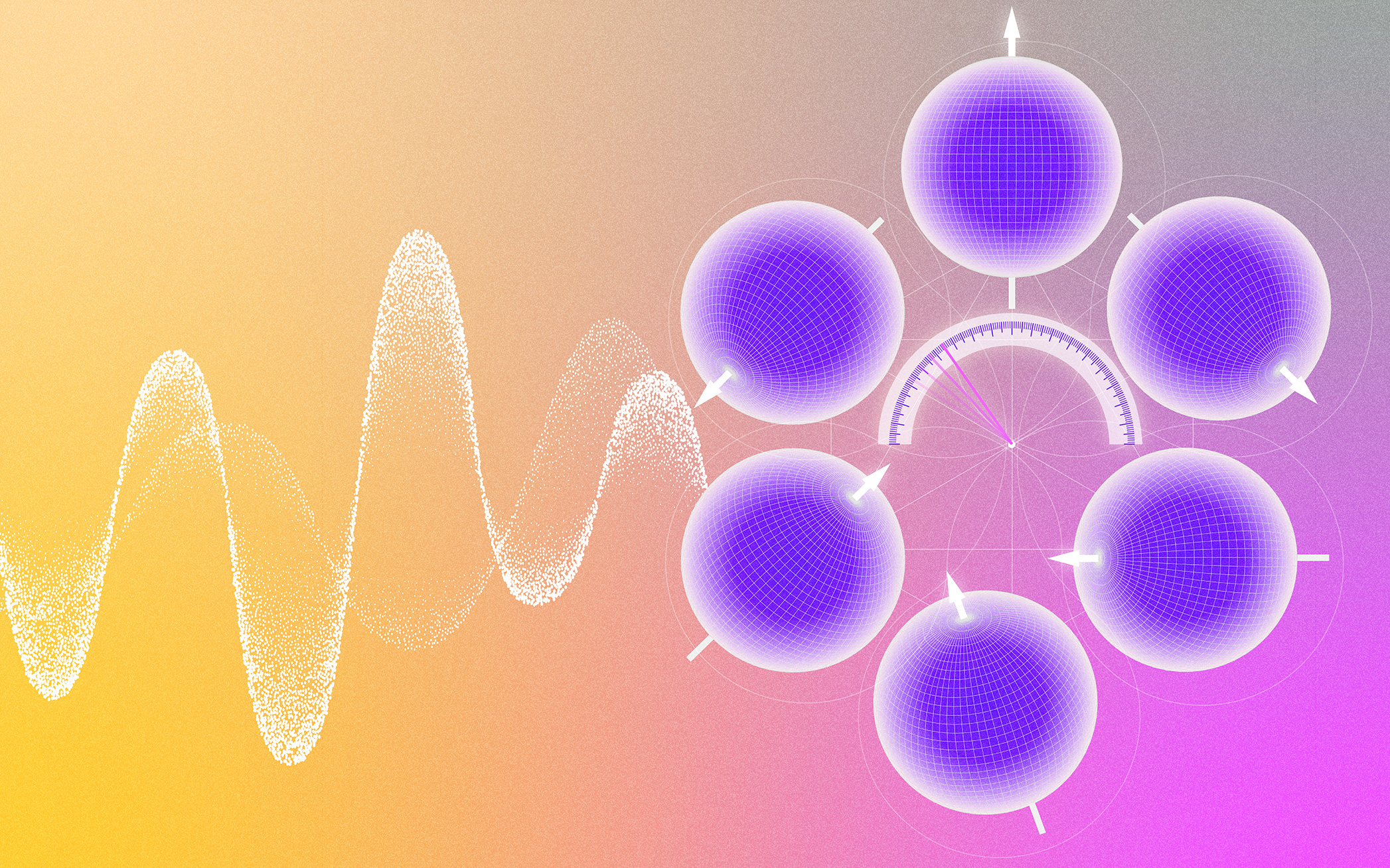
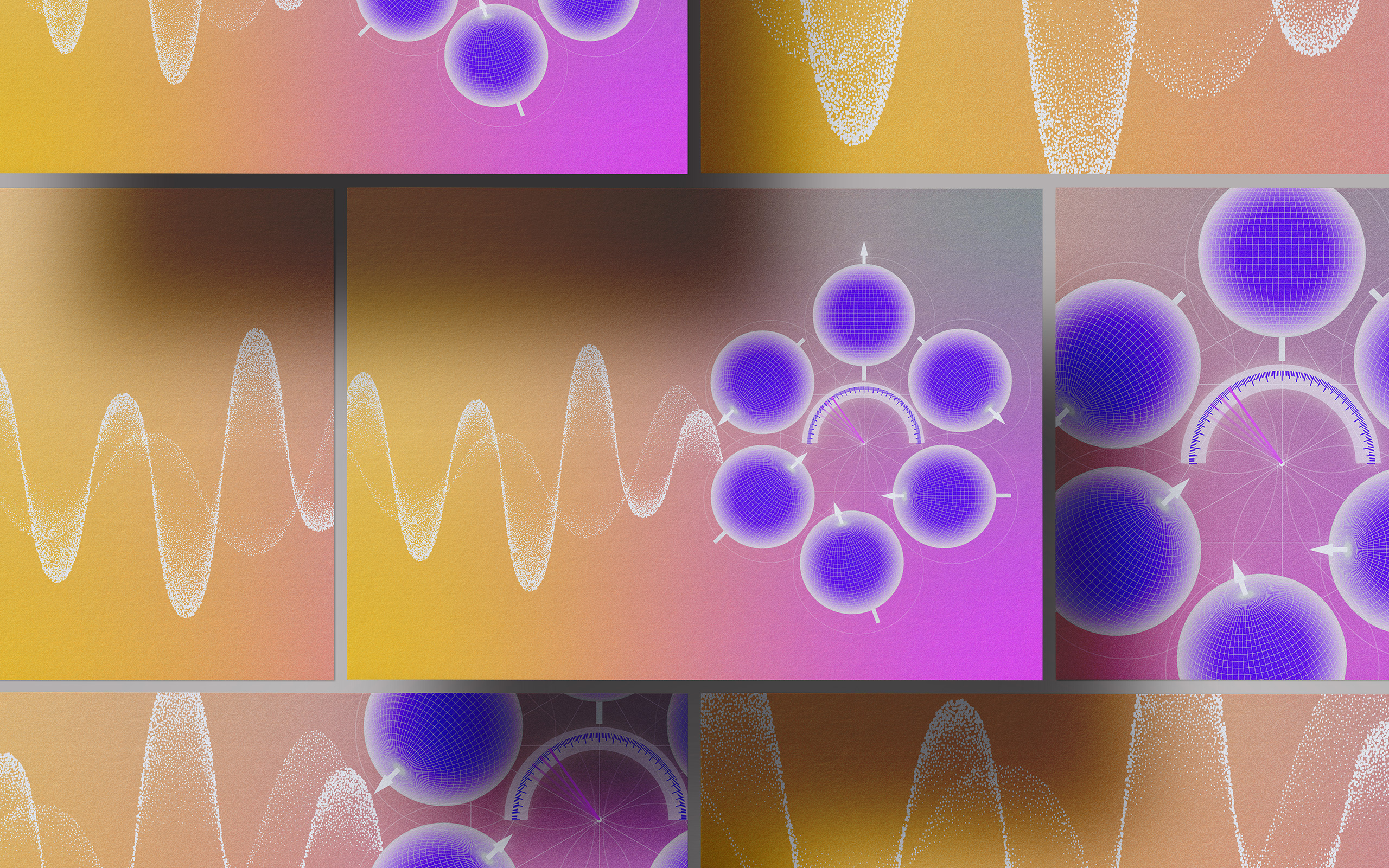
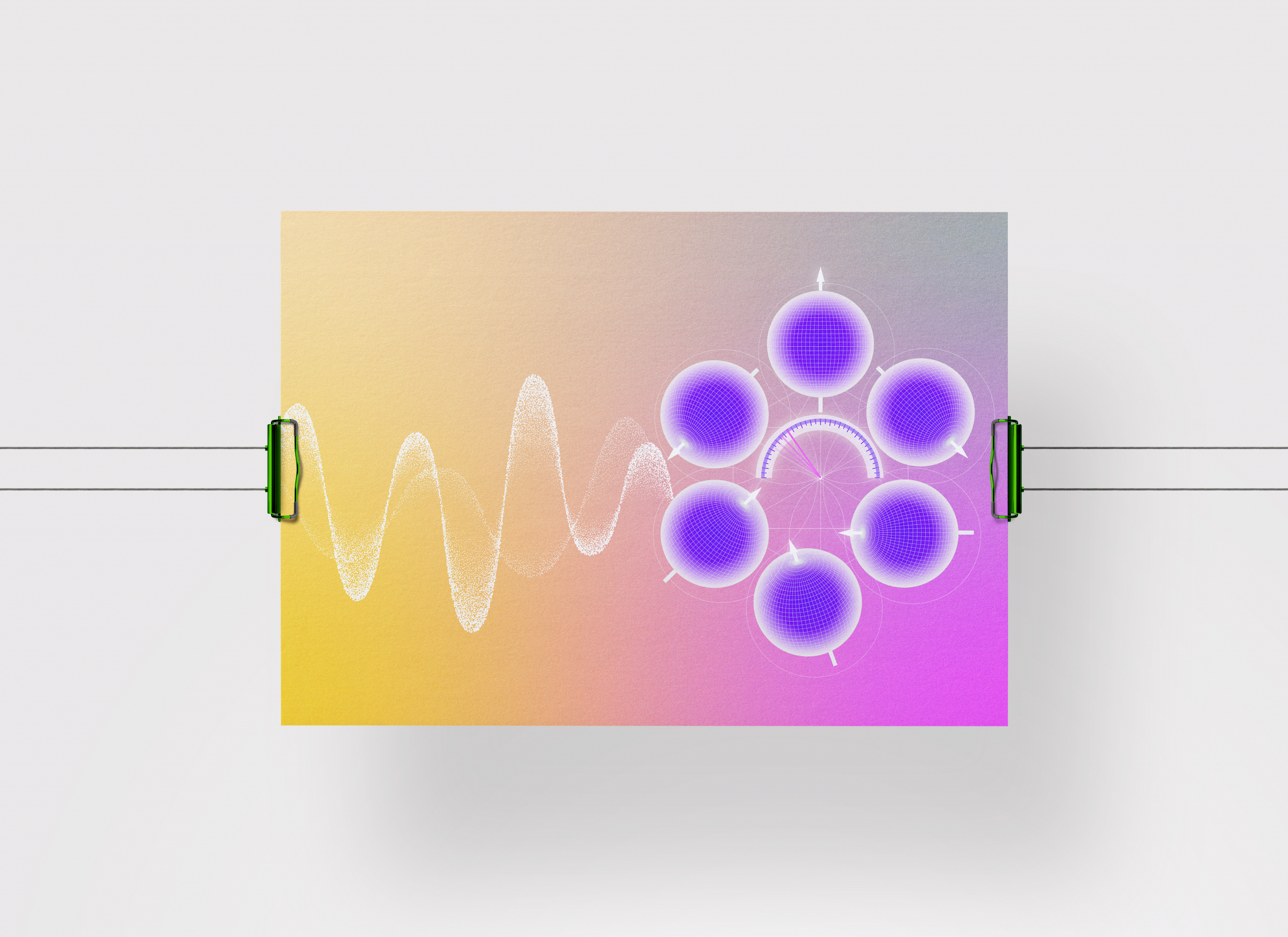
The illustration visualises the online protocol at the heart of the study. On the left, a chaotic time series — the kind of complex signal the algorithm is trained to forecast. On the right, six qubits arranged in a reservoir, each connected to the next without being reset between measurements. The semicircular gauge at the centre represents the tunable measurement strength — the variable that the researchers adjust to control how much backaction enters the system. The arrows piercing each sphere are the indirect measurements: soft enough to extract information without fully collapsing the quantum state.
The colour transition from warm yellow to electric pink maps the shift in the system’s behaviour as measurement strength increases — from weak perturbation to controlled disturbance. The gridded spheres reference the Bloch sphere, the standard geometric representation of a qubit’s quantum state.
The image had to make a counterintuitive idea immediately readable: that the disturbance is not noise to be filtered out, but signal to be used.
Published in: Physical Review X, April 2026 Credit: ICFO / Tomás Charles